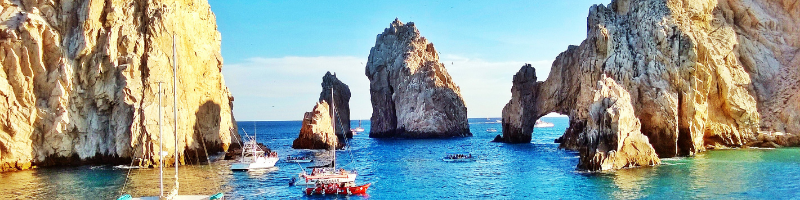
Welcome to our Los Cabos blog, your go-to resource for everything that makes this coastal paradise unique. Whether you're a resident, a visitor, or considering a move, we provide in-depth insights into the best dining, activities, and cultural highlights, along with expert real estate tips. Join us as we delve into the vibrant lifestyle of Los Cabos, where adventure meets tranquility. Discover the essence of Los Cabos Lifestyle and Real Estate with us!

Dec. 3, 2021

What are the 4 Types of Property Ownership in Mexico?

Knowing what you’re buying is common sense for a reason, so if it applies for groceries it should very much apply for real-estate and property, especially when it comes to purchasing in a foreign country. Such is the case with Mexico, and even when considering the restricted zone laws there’s still plenty to know about the inner workings of the neighboring country, which is exactly what I’m here to talk to you about today: the four types of property ownership in Mexico and what to look out for.

Original Properties of the Mexican Nation.

Any form of natural site falls under this category. National parks, jungles, forests, mountains, marshlands, volcanoes, wetlands, you name it. More often than not these can’t be neither sold nor tampered with, with most being protected natural areas, and public spaces beyond private property.

Property as Decreed by the Mexican Nation

This applies to the Federal Maritime Terrestrial Zone, a strip of land 20 meters back from the high tide zone along the coasts. Alongside it are Mineral, Water and Oil deposits. All of these are property of the Mexican government, although you can obtain concessions for their use in very specific scenarios (likely not real estate related).

Social Properties of the Mexican Nation and the Problem of the Ejido.

These come in two: Communal and Ejidal/Ejido. Communal properties are government owned lands, and you’ve probably seen a fair share during your trips to Mexico. These are the town squares, cultural hubs, and ancient, historically-significant buildings, and as such, are not for sale, unless stated otherwise. 

Now, what’s an Ejido? To make a long, convoluted, and needlessly complicated story “short” an Ejido is a federal-owned patch of fertile land that’s borrowed to the farming communities. These communities can work the land, live off the land, but they hold no rights of property. No one can truly own an Ejido, and there are no Ejido owners, only possessors, therefore Ejidos cannot be sold, only transferred in possession to other Ejidatarios. What’s an Ejidatario? In layman’s terms: a farmer or citizen that lives close to the Ejido, and one that needs to go through a lengthy process (9-10 years) to earn the title, which is, of course, government granted. 

As such, Ejido’s are a huge time investment and have far too many restrictions to be viable. Being possessors, nothing you build in an Ejido will be of your property, and that’s basically a complete lack of insurance. Many an attempt has been made to purchase one of these public spaces, but most end in elongated court cases that will inevitably lean in favor of the Ejidatarios, and since any form of “purchase” is considered illegal, it is also unwise to try to worm your way around the fine print. Seriously, don’t.

In short, unless you’re a farming connoisseur, you should reconsider whatever Ejido-related projects you may have. It might not be worth the trouble. It really won’t.

Private Property and Co-Property

The one you’re looking for. Private property can be bought, sold, rented, inherited, awarded by judicial decree, and even acquired as a gift. However, did you know there’s also co-property? 

Co-property is 100% what’s on the box: a property owned by family members, rather than a single person. These usually come in the form of old titles, and heirs and what have you. Say, for example, a couple purchases a ranch about 100 years ago and then said property is now property of the extended family. 

This means that for someone to buy the property, everyone must agree to the transaction. As you can guess, this can lead to troublesome scenarios, where an unknown family member may object in the middle of a process, costly legal procedures, and all that not-so-good stuff. 

So, to close things off, whenever you set your eyes on a property, no matter how amazing it may look or how promising a project it may be, always, and I do mean always double check the title, the ownership, and the area it’s built on. You don’t want to end up in the middle of a family feud, shady business or worse, an ejido dispute.

Remember, stay sharp, and keep your head on the game! 


Dec. 3, 2021

4 Key Differences Between the Buying and Closing Processes of Mexican and North American Real Estate

Purchasing real estate in Mexico is far more than just knowing about public notaries and bank trusts. It’s a whole world in of itself, big enough for a whole book, but why bog you down with walls of text when I can give you the reader’s digest version instead? Four key, bullet-point differences to be exact. So let’s get to it!

The Difference between Mexican and North American Licensing for Real Estate Agents and Brokers

Contrary to the US, Mexico has no official or specific government regulation when it comes to the real estate business, nor does it have the need of a licensing requirement (as of time of writing anyway). Becoming a broker or real estate agent in the US takes a long time and plenty of experience, here in Mexico however, it’s a mixed bag with people packed to the brim with qualifications, credentials and experience, and others who, to put it mildly, don’t.

But that’s not to say it’s a bad thing, there is, as mentioned below, a special system in Mexico known as Multi-Listing, which, in tandem with AMPI (The Mexican Association for Real Estate Professionals), helps provide professional aid to its clients, through stricter requirements for its members: minimum education requirements, background checkups and the like. 

In short, not everyone makes the cut, only the best of the best. 

The Difference between Mexican Realtor Associations and Listings and their North American Counterparts

Mexican realtor associations, while not carbon copies in name, function in much the same way as their American counterparts, and I’m going to show you how. 

First off, when it comes to listings both US and Mexico sellers sign an Exclusive Listing Agreement, which is an agreement that obligates them both to pay the agreed commission to the listing broker, regardless of who sells the property.

As for the Multiple Listing Service practices of the US, they translate rather well here in Mexico, being forms filled by agents during the listing of a property. These filled forms are then entered into an online database, which from then onward are fully accessible to the other members of the AMPI/service, as well as anyone interested in the property (such as buyers/general public, for example). 

Lastly, when it comes to the showing of a property, Mexican agencies, such as AMPI, don’t handle key-safes. So instead of having a special end-all be-all key for any kind of property, an agent in Mexico must first find a seller, get the keys, and then show the property to the buyer/client.

The Differences between Mexico and North America when it comes to Selling, Buying, and Closing a Real Estate Property Deal

Selling and buying-wise in US and Mexico are pretty much the same. When you’re selling you use the listing system, you get the keys, and you use signs to promote the property, only difference being that, as I’ve mentioned before, there are no key safes and you must come to an agreement with the seller in order to get the keys. When it comes to buying, the only real difference comes from the transactions, which are mostly done through cash or developer financing, that way the payment doesn’t go straight to the seller but is instead transferred over to a bonded, US Escrow account (or a title company).

Now for the “tricky” part: closing the deal. Anything real-estate transaction related must be finalized in the presence of a notario, without exceptions. As you already know, notarios are representatives of the Mexican Government, and as such, they will verify that every aspect of the transaction adheres to Mexican law. Otherwise, you might just kiss your deal goodbye.

As for closing costs, they range anywhere from 4% to 7% and while buyer and seller(s) must meet the notario during the signing process, the transfer does not require the notario itself. The Escrow Company instead pays it out, once the notario approves of the document signing process.

Differences between Mexico and North America when Recording Real Estate Transactions

Though not county offices, Mexico does have an equivalent: the Public Registry Office. This public service registers all transactions that occur within the municipality (and are authorized by the notario). As of note (and as a little tip), you should avoid Master Trusts if implemented, since that does not grant you, as a buyer legal, remedy should the seller default at any time. You should instead wait to buy it off through the right means until the bank trusts and insurance are available. Really, trust me on that one.

So there you have it. Not so daunting once you put it into perspective isn’t it? You just need to follow the rules, and stay sharp. That way your business trip to Mexico will be a fruitful one, and not a complete mess. 


Dec. 3, 2021

3 Key Differences Between Real Estate in Mexico and USA for American Investors

It’s not just the food that tastes different. Yes, there’s law and details and whatnot, but there’s also a cultural difference, one you need to take into consideration before embarking into any sort of real estate investment in Mexico. Otherwise, you might find yourself confused, irked or even soured from a perfectly viable and long-term business relationship. So let’s keep misunderstandings a thing of restaurant orders and not life-long real estate investments, shall we. How? Keep on reading.

Time isn’t the same (yes I’m serious about it)

Americans and Mexicans have a very different opinion on time. Americans view it in a financial manner. Time is of the essence, time is money, and any time lost is lost cash. Mexicans on the other hand, view time as a resource that is always there, and while yes, everyone knows that time is finite, here at Mexico we’re a lot more laid back about it. 

So when your promising business partner arrives at 4:45pm when you said that the appointment was going to be between 4pm and 5pm, don’t throw the towel just yet (or delete the contact if you will). Rather, think ahead. If you want an appointment to happen, state a specific time-slot. That way there’s less margin of error and you have a better range to work with, instead of leaving it up to interpretation. 

Also, don’t be afraid to “re-confirm” a meeting the day before, it works wonders.

Schedules don’t always match. 

Americans have an average office time of 8am to 5pm, with lunch hour around 12am to 1pm. This is so you can spend the rest of the evening with your family. However, this ain’t quite so in Mexico. Most offices here start out around 9-10am. So instead of starting out early and leaving early, Mexicans instead have longer lunch hours to spend with their families anywhere from 2 to 3 hours.

This means that you need to know the schedule of your business partner. So be direct and ask them about it, that way you can make appointments that will match regardless of your schedules and neither will be trying to contact the other during an inopportune time. It’s also a way to open up, something I’ll talk about in the last point below.

Business attitudes are not the same

Mexicans often find American business people as impatient, which again is because of cultural differences. Americans value directness and going straight to the point, whereas Mexicans prefer to know the person they’ll be working with and the personal relationships that will come of the process. In fact, it’s very rare that you’ll make a real estate deal without meeting the owner face to face. Phone deals aren’t a thing here (most of the time).

However, this value of manners means you might come into situations where a business partner might not say no to something, but they won’t do it anyway. You can easily circumvent this little bump by being both direct, honest and kind. Let them know there’s nothing wrong if they can’t do whatever favor at the moment. Let them know that yes or no answers are perfectly fine for you and that you don’t mind. This will make them feel like you opened up and that you’re approachable, something Mexicans value.

As you can see, getting a good real estate deal in Mexico isn’t just a matter of knowing how things work from a legal standpoint. It’s having awareness of these differing cultural expectations, understanding one another and making stronger, more effective business relationships because of it.


Dec. 3, 2021

3 Tips to get your Business Mentality Ready for your Next Investment Trip to Mexico

Ever heard those horror stories? Say, about a real fine vacation home near a pristine Mexican beach, Cabo San Lucas for example. And then there’s this real nice old couple that wants to start the proper transaction with the Notario, the Fideicomiso and what have you, but then the over-excited owner/salesman goes like “give me the cash instead, that’s how we do it in Mexico”? Only for the salesman to disappear with the money and never turn?

Well, consider it a cautionary tale, and for good reason, because it happens often. But it’s something you can avoid. After all, you don’t want your business trip to Cabo being a fiasco. How, exactly? Keep on reading.

Turn off your Party brain and get on the Business train

It’s understandable. We hear “trip to Cabo San Lucas” and we immediately think of margaritas and tequilas, but you need to control that part, as much as you might not want to. Once you get past the border, it’s not all fun and games. If you treat it as such there will be people looking to blindside you into bad deals or even downright swindles, not only that, but genuine owners and real deals will slip off your fingers because you didn’t take it seriously enough.

Sure, this doesn’t mean that you can’t have some good fun at the beach or at the local bars, but you need to know when to work hard and when to have party hard. You can’t mix them.

Don’t think deals are going to be everywhere and within reach

While Mexico is a land of opportunity, that doesn’t mean it’s low hanging fruit anyone can pick up, let alone expect for it to drop by your yard. There are many great deals on offer, but you need to spend time and effort in order to make a sound investment. This goes from being well informed about promising projects before your trip and knowing where to look once you reach Cabo. You won’t hit the jackpot if you drop by unannounced and uninformed. Remember, knowledge is power, and so is foresight. 

Never let your guard down. Know the rules.

Like I said before, people will try to take advantage of party goers, because easy-going people tend to be easy targets. If you don’t know how real estate in Mexico works, namely, the transactions, the requirements of the notario and fideicomiso, you will be seeing a lot more “unbelievable” and “cash-only” deals popping up. And if a deal is too good to be true, if there is no office or established business backing up that overtly friendly stranger, if it sounds too easy, then that’s a clear sign for you to decline.

Don’t let shortcuts and seeming one-in-a-lifetime deals cloud your judgment—any more than those (admittedly tasty) margaritas. You need focus, so that next time you take a trip down to the best beach location in Mexico, not only can you score an amazing property, but you can also enjoy yourself as well, without either side bumping into one another.


Dec. 3, 2021

The 3 Easy Steps to Understanding Fideicomiso Explained for Real Estate Investors

There’s a term you’re going to be seen throw around often during your investments, restricted zone. That means 62.1 miles from the US/Mexico border and 31.05 miles from the coast. This part of Mexico requires that when you buy real estate property the title must be transferred to a Mexican bank. The bank, in turn, holds it as a trust for you, the foreign buyer, as the beneficiary. That’s the general gist of things, but let’s see what’s really going on inside the Fideicomiso.

What’s a Fideicomiso?

As I mentioned before, it’s pretty much the only way you can purchase property in certain parts of Mexico, but if you need a simpler comparison then here’s how you can picture it: compare the Fideicomiso/bank trust with a deed of trust in the US (loan security). If you buy a home for cash you get that title right away, but most people don’t (for understandable reasons), so in that case people get a deed of trust which gives the buyer an “equitable title”, with the right to use but only a restricted one to sell, once the property is fully paid off.

Until the loan is paid, the title is held by the trustee and in the case of Mexico and Fideicomiso, the bank itself is the trustee and holds the title for you. Yes, you never get this title but so do many homeowners back at the US, because of selling or refinancing before the 30-year term of the loan is complete (you do get a copy though, there’s that).

Why do I need a Fideicomiso?

You already know how tricky Mexican law can get and why you need a Fideicomiso to circumvent the “restricted zone” but let’s not talk about requirements for a moment. Let’s talk benefits. As a beneficiary, you have full rights of ownership; you can buy, sell, lease, use, bequeath, improve, transfer or even encumber the property. It’s all yours! In fact, what used to be a 30-year term increased to 50 during a law change in 1993 and guess what, it’s renewable!

The fideicomiso also an excellent form of ownership because it allows survivability through co-beneficiaries (allows you to probate) and it protects you if someone tries to sue you from your property, being backed by the Mexican Law.

How do I get a Fideicomiso?

The process of acquiring real estate in the restricted zone (with proper assistance like legal representation and a Notario) will lead you up to the fideicomiso naturally since it’s a key requirement. If we’re talking costs however, it ranges from 3500 to 5000 USD, paid in annual fees of anywhere from 600 to 1000 USD. This price covers the government permit fee, bank set-up fee and one year’s fee.  A reasonable price that will grant you all the benefits of a summer home and the legal protection and perks that comes with the fideicomiso.

So there you have it. Not so difficult once you get past the word itself isn’t it? Sure, the whole thing might feel cumbersome but the fideicomiso is nothing more than a necessary step and one that will give you amazing benefits either way. If you play by the rules, the rules pay you back.


Dec. 3, 2021

Explaining the ABC's of Notario Publico in 3 Easy Steps

I’ll be honest with you, Mexico can get a bit complex with its legal system. First off, its civil law, compared to the common law system of the United States, so its less flexible in interpretation and this can of course lead to some issues during translation, but fret not! That’s what these blogs are for, making things a little bit easier for you, a little bit more accessible and what better way to do so than by giving you a quick run through one of the key elements involved in any real estate investment in Mexico, the Notario.

Difference between a Public Notary and a Notario

Otherwise known as notario publico, you should know right off the bat that it’s not the same as a public notary (contrary to what logic dictates). In the U.S. anyone can post a bond, pay a fee and become a public notary. In Mexico however, the notario needs to practice the law 5 years at least (and pass a difficult exam) before doing so. A rough entry point no doubt, in fact, there’s only 17 notarios total in Baja California—as of time of writing.

What’s a Notario and why do I need one?

The notario’s coveted certification allows them to give authenticity to legal acts and documents, like contracts for example. They can give advice to parties on how to comply with the Mexican law for whatever it is they try to do (real estate and otherwise) and close real estate transactions, as well as many other legal transactions, including the forming of corporations in Mexican soil. 

Notarios investigate all aspects of property-orders appraisals (city and state), make sure the title is clear, draw all the documents for transaction and calculates taxes based on appraisals. They also draw up the official contract, not the buyer. Not the seller and definitely not the agents, only the notario can do this. The buyer does get a certified copy of the title though.

In layman’s terms a notario is the mix of a real estate lawyer and tax collector, quite an important mix as you have noticed. You can’t really think about investing in Mexican real estate (or investing in Mexico in general) without a notario. It’s that important.

Where do I find a Notario?

First off, you need to remember, the notario represents the Mexican government, not you. You may hire the notario and the notario will help you out, but you need your own real estate agent and/or lawyer for your own personal representation during the deal.

After getting your own representation, you could start searching online for whatever notarias (notario workplaces) there are at your area. Yes, you could, but I would recommend you take a different approach. Get to know people that invest in real estate, make friends that invest in real estate and soon you’ll start to know the best notarios around through word of mouth. Because, as hard as it is to become a notario, not all of them are made equal.  

After that, you’re pretty much good to go. Get in line with the best of the best and start rolling in those big real estate investments! 

Until next time!


Nov. 9, 2021

What are the 10 Top Things To Do In Cabo San Lucas?


Cabo San Lucas is a magnificent destination. It's a resort city located at the southern tip of the Baja California Peninsula on the West Coast of Mexico. It is one of Mexico's top 5 tourist destinations. Known for its scuba diving, marine life, and blue flag beaches, Cabo San Lucas is an incredible place to visit all year long. There are some exceptional things to do in Los Cabos ranging from sightseeing, shopping, and visiting popular tourist destinations. Cabo has an active, and fun nightlife experience, as well as offers that serenity and peace of being by the beach. Some Los Cabos activities that you might be interested in are scuba diving, visiting the Arch of Cabo San Lucas, and spending time at other Cabo San Lucas attractions. Los Cabos attractions are beautiful and worth checking out. Here are 10 breathtaking things to do in Cabo San Lucas the next time you visit.

Cabo attractions that you need to check out are Los Cabos sightseeing, scuba diving Los Cabos, various Los Cabos tours, Los Cabos excursions, and more adventure that Cabo offers. Ensure you always follow local rules, laws, and guidelines when visiting a new destination.

Blue Flag Beaches

Los Cabos has many Blue Flag beaches to explore.  Make sure you're swimming in a Blue Flag beach. Many beaches in Los Cabos have unsafe water conditions. The Blue Flag indicates that the water is clean and meets a certain water safety standard. It also means that the beach is accessible and welcomes visitors of all abilities. A few blue flag beaches to explore are Pamila, Las Viedas, and El Corsalio. Los Cabos is famous for its beaches and offers many water activities as well. Some examples include water surfing, jet skiing, and snorkelling. There is also sailing and many fishing tournaments in Los Cabos as well. 

Explore a Boat Tour

Los Cabos offers many tours for various activities. For example, explore a whale watching boat tour anywhere from December to April. (That is when the whales are most active.) 

You will mostly see Humpback whales. They are often seen coming right up close to the boat! During their active season, it's common to see a lot of whales while on the boat tour.

Go Snorkeling

Los Cabos has one of the most exquisite coral reefs in the world. Go scuba diving or snorkeling and get up close and personal with the beautiful underwater world. Check out Santa Maria Beach first thing in the morning and explore the gorgeous underwater on your own. Don't forget your underwater phone case so you can get a close-up of the intensely beautiful reef.

Visit Flora Farms

While in Los Cabos, ensure you visit Flora Farms. Flora Farms is a farm that grows herbs, flowers, and all types of plants. This is a unique and beautiful destination. You can even eat there as they have a kitchen to restaurant table right on site. 

Go swimming

Go swimming in Medano Beach. This beautiful beach boasts the most perfect golden sand. The water is generally calm and safe to swim in and explore sports like paddleboarding. A few other beaches that are worth checking out are Chileno Beach and Acapulquito Beach. Chileno Beach is particularly good for snorkelling and for anyone who prefers a quieter atmosphere. Chileno Beach is not lined with shops and restaurants and is more private and secluded.

Swim with whale sharks

Get your wetsuit on and go swim with whale sharks while you're in Los Cabos. Whale sharks are giant and grow to approximately 40 feet. Whale shark season ranges from early winter through late spring. They only eat plankton and are generally very gentle animals. You can swim very nearby these majestic animals, but you can't touch their skin. It could cause harm to them!

Get local

Another fantastic thing to do in Los Cabos San Lucas is to adventure downtown to see the art. Stroll through the streets and back lanes and take a few minutes to appreciate the culture and art Los Cabos has to offer. Many art galleries are open late and often host art shows as well. This is a great way to experience the culture and support local creators. 

Go ziplining

While you're in Los Cabos, strap on some cables and go zip lining! This will give you an adrenaline rush like no other activity you've experienced. Explore Los Cabos from a different angle with zip lining. Fly over the tops of trees at 100 or even 200 feet high. There are other Los Cabos adventures as well such as quading through an intense and fun course.

Try Paddleboarding

While you're are in Los Cabos, you should try paddleboarding as well. Stand-up paddleboarding is very popular in Los Cabos and draws quite a crowd! There are many places on Medano Beach that rents paddleboards. If you're already a pro, try our paddleboarding tour and see Los Cabos in a completely different way. The paddleboarding tour is guided and will show you some neat hidden gems in Los Cabos.

Explore local beach vendors

Explore the local beach vendors along the shores. You will find exceptional crafty items and the most unique gifts. Support artists, creators, and local and small shops while you're in Los Cabos. Shop for all your souvenirs here and find incredible pieces.


Los Cabos is an incredible place to see. It is a suitable destination year-round, and tourists have positive things to say no matter the time of year. It has beautiful beaches and offers amazing things to do. Go whale watching, snorkeling, swimming, or simply adventuring, and Los Cabos has something for you. There is ziplining and quading, fantastic hiking trails for the outdoorsy traveler, beach, paddle boarding, and snorkeling for the more relaxed traveler.

Posted in Cabo San Lucas